Norwich sits at just 30 metres above sea level on the River Wensum, a city built on glacial tills, alluvium, and chalky boulder clays that have shaped its construction landscape for centuries. With a population exceeding 140,000 and growing, the pressure on foundations is higher than ever. The fine-grained soils common across East Anglia are highly susceptible to moisture changes, and that is where Atterberg limits testing becomes essential. These tests define the water content boundaries between solid, plastic, and liquid states in cohesive soils. Our laboratory applies the Casagrande cup and cone penetrometer methods outlined in BS 5930, delivering plasticity index values that directly inform foundation design. Without this data, structural engineers risk misjudging the shrink-swell potential of the local Norwich clay, a mistake that leads to cracked masonry and costly remedial work.
Liquid limit and plastic limit are not just numbers; they define how Norwich clay will behave under every rainstorm and drought cycle.
Methodology applied in Norwich
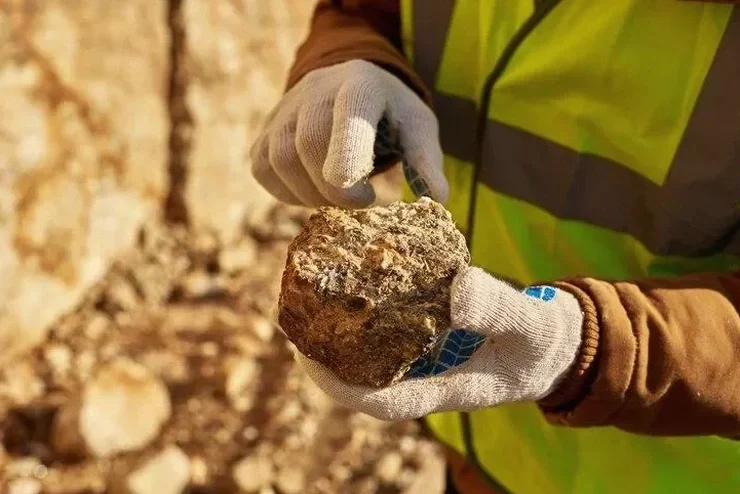
Field demonstration
Local geotechnical conditions in Norwich
BS 5930 and Eurocode 7 (BS EN 1997) explicitly require plasticity data for foundation design in cohesive soils, and Norwich's geological profile makes this non-negotiable. The city lies on the Crag Group and Chalk bedrock, overlain by glacial till with variable silt and clay content. Misclassifying a low-plasticity silt as a clay can lead to incorrect bearing capacity assumptions. Worse, ignoring high-plasticity clays in the superficial deposits near the Yare floodplain risks severe volume change during wet-dry cycles. The consequences show up as differential settlement in lightweight structures, cracked retaining walls, and failed shallow footings. Our Norwich clients receive a full plasticity chart plot with Atterberg limits results, allowing geotechnical engineers to select appropriate pile lengths or ground improvement techniques before construction begins.
Our services
The Atterberg limits testing forms part of a wider geotechnical laboratory programme available to Norwich projects:
Liquid and Plastic Limit Test
Full BS 5930 compliant determination of LL, PL, and plasticity index. Includes Casagrande cup method and single-point fallback for high-throughput site investigation programmes.
Plasticity Chart Classification
Plotting of results on the Casagrande plasticity chart to classify fine-grained soils as CL, CH, ML, or MH. Essential for selecting appropriate earthworks specifications and foundation solutions in Norwich.
Questions and answers
What is the typical cost for Atterberg limits testing in Norwich?
The standard fee for liquid and plastic limit determination ranges from £50 to £80 per sample, depending on sample condition and required turnaround time.
How long does the test take from sample delivery?
Standard reporting takes 3 to 5 working days. We can process urgent samples within 24 hours for an express surcharge, which is common during active earthworks monitoring in the Norwich area.
What soil types require Atterberg limits testing?
Any fine-grained cohesive soil with particles passing the 425 micron sieve qualifies. Norwich's glacial till and alluvial clays are prime candidates, especially when moisture-sensitive behaviour could affect foundation performance. More info.