We often see ground investigation reports that skip cyclic testing based solely on SPT blow counts, leaving a critical gap in the risk profile. In Norwich, this shortcut catches up fast when planners review basements or multi-storey schemes near the River Wensum corridor. A proper soil liquefaction analysis does more than tick a planning condition box—it defines whether your foundation design needs ground improvement, deeper piling, or a revised drainage strategy. Our lab team runs stress-controlled cyclic triaxial tests on undisturbed samples recovered from the Crag Sand and overlying alluvium, delivering the parameters your structural engineer actually needs. We also cross-check results with in-situ SPT data and CPT profiles to calibrate the factor of safety against the UK National Annex to Eurocode 8.
A saturated Crag Sand at 40% relative density can hit 5% double-amplitude strain in under 12 cycles—long before the structural engineer assumed.
Methodology applied in Norwich
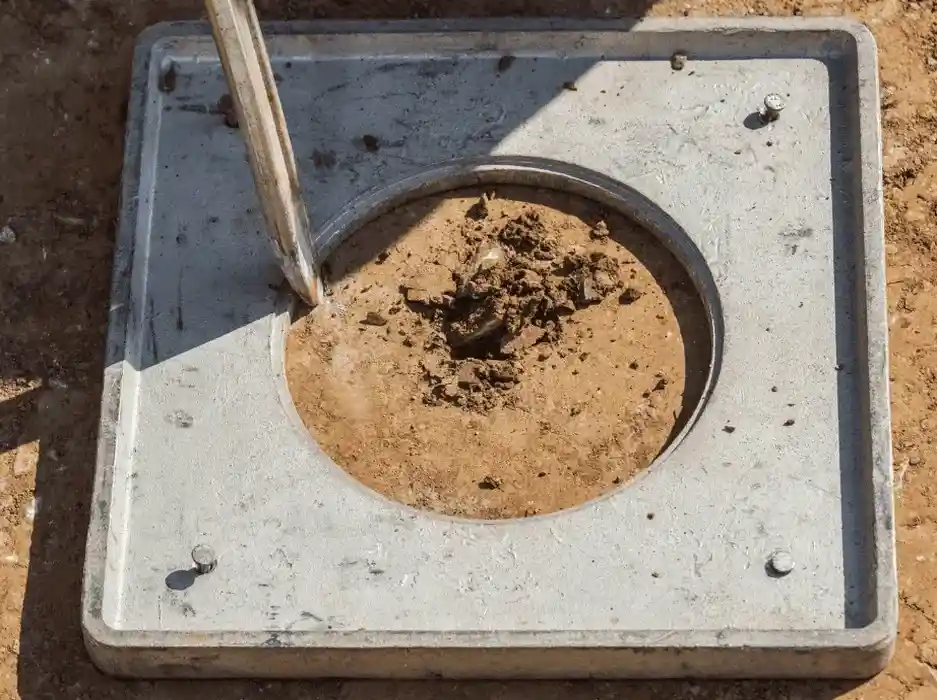
Local geotechnical conditions in Norwich
The triaxial cell sits inside a load frame rated for 10 kN dynamic axial capacity, with a servo-controlled pneumatic system that applies sinusoidal loading at user-defined frequencies—typically 1 Hz for earthquake simulation in UK intraplate settings. A mid-height pore pressure transducer tracks excess pore water pressure in real time, and the data acquisition logs at 100 samples per second. The real risk we flag for Norwich developers is not catastrophic flow failure but post-liquefaction settlement. When pore pressures dissipate after shaking, the soil reconsolidates, and differential movement of just 15 to 25 millimetres can shear buried utilities, crack slab-on-grade floors, or misalign pile caps. We quantify this reconsolidation strain directly from the post-cyclic phase of the test, giving your design team a settlement estimate grounded in lab-measured soil behaviour rather than generic empirical charts.
Our services
Our Norwich laboratory delivers a phased liquefaction assessment that moves from desk study through advanced testing to design recommendations. Every project receives a site-specific report structured for direct use in foundation design packages.
Liquefaction Screening Study
Geological desk review of BGS mapping, historical borehole logs, and groundwater records for the specific Norwich postcode, including susceptibility classification per BS EN 1998-5 criteria.
Cyclic Triaxial Testing Programme
Undrained stress-controlled cyclic loading on intact or reconstituted specimens from the Crag Group and Breydon Formation, with pore pressure and strain monitoring across the full loading sequence.
Post-Liquefaction Settlement Analysis
Reconsolidation phase testing after cyclic failure to quantify volumetric strain, converted to settlement profiles for strip footings, raft foundations, or pile groups.
Ground Improvement Feasibility
Comparative analysis of vibrocompaction, stone columns, or rigid inclusion options to mitigate liquefaction risk, with pre- and post-treatment verification testing protocols aligned to BS 5930.
Questions and answers
How much does a soil liquefaction analysis cost for a single residential plot in Norwich?
For a typical single-plot residential site in the NR1–NR7 area, a full liquefaction assessment including cyclic triaxial testing on two specimens ranges from £2,270 to £2,930. The final cost depends on sample depth, number of specimens tested, and whether we need to run index classification tests first to confirm susceptibility.
Do all Norwich sites require liquefaction analysis under building regulations?
Not every site automatically triggers the requirement. Approved Document A references Eurocode 8, which mandates assessment when the ground profile contains saturated granular soils with SPT N-values below 15 and the design peak ground acceleration exceeds 0.02g. Much of the Wensum Valley alluvium falls into this category, particularly where the water table sits within 5 metres of foundation level. Our screening study determines whether you can rule out the hazard without full cyclic testing.
What sample quality do you need for cyclic triaxial liquefaction testing?
We require undisturbed Class 1 or Class 2 samples to BS EN ISO 22475-1, typically recovered using thin-wall Shelby tubes or triple-tube core barrels. Disturbed samples can only be used if reconstituted to field density and stress history, which introduces additional uncertainty in the factor of safety. We coordinate directly with drilling crews operating in Norwich to ensure sample handling minimises moisture loss and vibration damage during transport to our laboratory.