Drive from the flint-knapped lanes of the Cathedral Quarter out toward the post-war housing estates of Bowthorpe, and the ground beneath the asphalt tells two very different stories. The city centre sits on Pleistocene river terrace gravels, free-draining but thin, while the western suburbs spread across chalky boulder clay that holds water and heaves with the seasons. A pavement that works brilliantly on the gravels of Thorpe Hamlet will rut and crack in the till of Hellesdon within three winters if the CBR assessment isn't tied to the right subgrade classification. Norwich isn't a uniform slab of geology, and flexible pavement design here has to read the landscape block by block.
A pavement designed for Norwich's till without accounting for its seasonal moisture swing might not fail until the third winter—by then the repair bill has tripled.
Methodology applied in Norwich
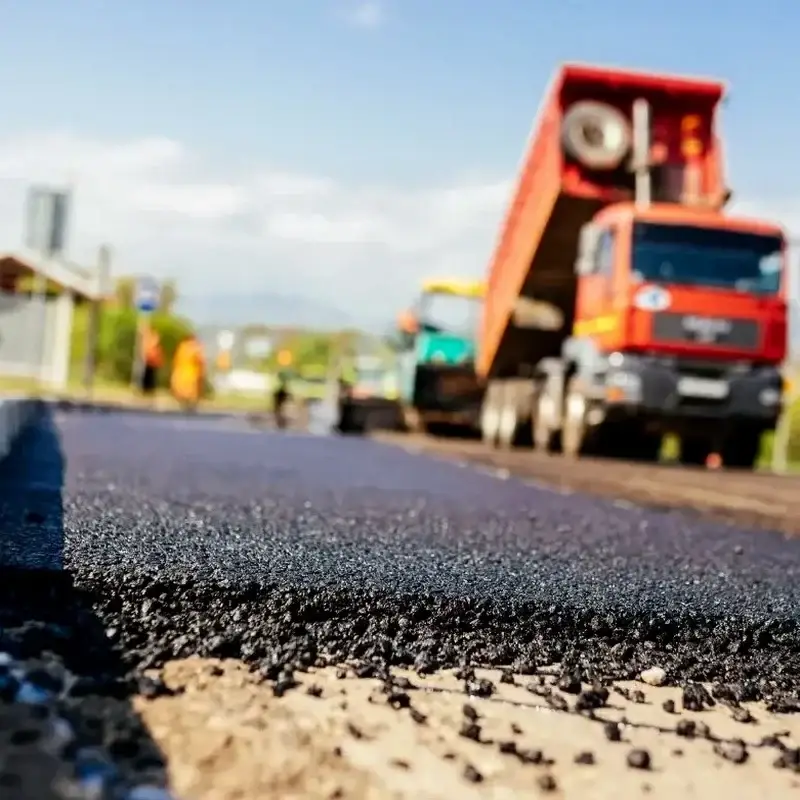
Local geotechnical conditions in Norwich
BS 5930 and the UK National Annex to Eurocode 7 demand a ground investigation that captures the vertical and lateral variability of Norfolk's drift deposits, and for good reason. On a recent infill site off Sweet Briar Road, the desk study suggested uniform Head deposits, but the trial pits revealed a lens of reworked valley gravel at 1.2 metres, perched on a clay seam and fully saturated. That lens, undetected, would have created a soft spot that punched through under trafficking in less than eighteen months. The pavement design was re-run with a geogrid separation layer and a 150 mm increase in the Type 1 sub-base, keeping the scheme within budget while meeting the 40-year design life. In Norwich, skipping a few boreholes to save a week on the programme is the quickest route to a five-figure remedial dig.
Our services
Our pavement design package covers the full chain from intrusive ground investigation to the final layer thicknesses, always calibrated to the specific geology of the Norwich site. We work with local contractors and Norfolk County Council technical approvals.
Subgrade Assessment & CBR
In-situ CBR testing and laboratory soaked CBR on Shelby tube samples, correlated with DCP profiles to map soft zones across the footprint of the development.
Pavement Layer Design
Foundation class determination per IAN 73/06, bound and unbound layer thickness calculations, and specification of asphalt concrete, HRA, or SMA surfacing to suit the traffic loading.
Drainage & Frost Protection
Design of sub-surface drainage, filter drains, and capping layers to meet the frost index for the Norwich area, preventing ice lens formation in frost-susceptible subgrades.
Questions and answers
How much does a flexible pavement design for a residential access road in Norwich typically cost?
For a typical residential access road or small estate road up to 150 metres in length, the combined ground investigation and pavement design package ranges from £1,240 to £4,280, depending on the number of trial pits or boreholes required and the traffic category.
Does Norwich's chalk geology simplify the pavement design?
Not always. Chalky boulder clay, which covers large parts of Norwich, is frost-susceptible and loses strength when wetted. The design must include an adequate capping layer and careful drainage detailing to manage this behaviour over the design life.
What traffic loading standards do you design to?
We design to HD 26/06 and the current IANs, covering everything from private drives (0.5 msa) up to heavily trafficked distributor roads exceeding 80 msa, with the foundation class matched to the site CBR.
Can you incorporate recycled aggregates into the pavement specification?
Yes. We routinely specify recycled crushed concrete and asphalt planings in capping and sub-base layers up to the percentages permitted by the Specification for Highway Works Series 600 and 800, provided the material passes our laboratory quality tests.
How long does the design and investigation process take?
For a standard residential or commercial scheme in Norwich, we typically deliver the factual ground investigation report within two to three weeks on site, with the pavement design and specification following within ten working days of receiving laboratory results.