Norwich's medieval chalk mines and river terrace gravels tell a story of water. The city's expansion onto the Wensum floodplain and the Cringleford chalk plateau has pushed engineers to understand how water moves through the ground. A desk study alone won't cut it. You need in-situ hydraulic conductivity values to design dewatering systems, assess cut slope stability, or model contaminant transport. Our team runs field permeability tests using the [Lefranc method in boreholes](/) in the dense chalk marl, switching to [Lugeon packer tests](/) when we encounter fractured zones below 10 metres. For projects near the river, we often combine these results with CPT profiling to map the alluvium-chalk interface and avoid surprises during excavation.
A single Lugeon value without packer isolation is a guess. Staged testing in Norwich chalk reveals the real fracture-controlled permeability profile.
Methodology applied in Norwich
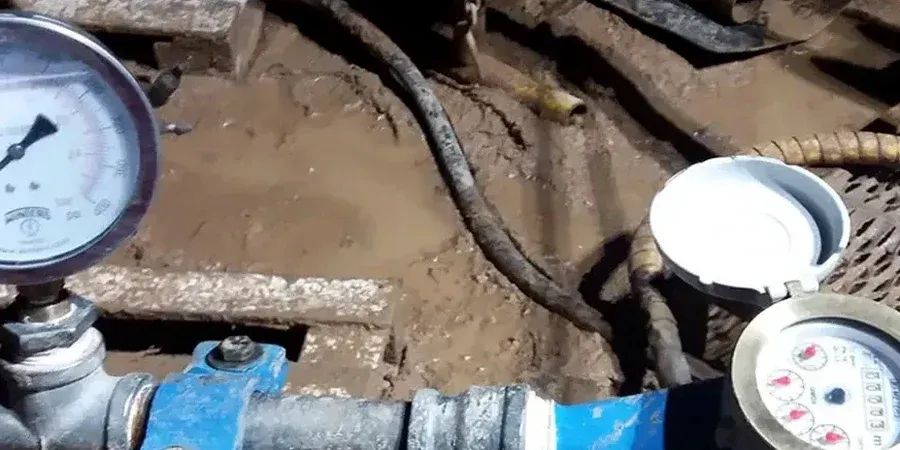
Local geotechnical conditions in Norwich
Norwich sits at 30 metres above sea level, but parts of the city centre are barely 5 metres above the Wensum's normal level. Groundwater here responds fast to rainfall. We've seen piezometric levels rise 1.5 metres within 48 hours of a winter storm. If you skip field permeability testing and rely on textbook values for 'Chalk Grade III', you risk getting the dewatering rate wrong by an order of magnitude. The chalk beneath Norwich is notoriously variable—the Upper Chalk is heavily fractured, while the Middle Chalk can be putty-like and nearly impermeable. Misjudging this contrast leads to flooded excavations, delayed programmes, and claims. A proper Lugeon test isolates these zones and gives you real numbers to feed into your groundwater control model.
Our services
We offer two complementary in-situ permeability testing activities across Norwich and Norfolk, tailored to the ground conditions encountered in each borehole.
Lefranc Variable Head Tests
Used in soils and very weak chalk. We isolate a section of borehole with a sand pack and run falling or rising head tests. Ideal for the Crag sands, river terrace gravels, and weathered chalk zones where packer sealing is unreliable. Each test delivers a direct k value for that specific horizon.
Lugeon Packer Tests in Rock
Pneumatic packer system for testing fractured chalk and harder bands. We run five pressure stages per interval, plotting flow against pressure to identify flow regime: laminar, turbulent, dilation, or washout. This tells you whether the fracture network will clog or open under injection pressure.
Questions and answers
What does a Lefranc or Lugeon test cost in Norwich?
Field permeability testing in the Norwich area typically ranges from £450 to £710 per test, depending on depth, number of stages, and whether we're running a simple Lefranc falling-head test or a full five-stage Lugeon profile. Mobilisation within the city is included for jobs with multiple tests. The final cost depends on access conditions and the drilling contractor's borehole preparation.
When should I specify a Lugeon test instead of a Lefranc test?
Specify Lugeon when you're in rock or stiff fractured chalk where you need to isolate a specific zone with packers. Lugeon gives you the flow regime, not just a k value—critical for dam grouting assessments or deep basement design where fracture dilation under water pressure matters. Lefranc is sufficient in soils, gravels, and structureless chalk where a simple open borehole section works.
How many permeability tests do I need for a Norwich basement project?
For a typical city-centre basement excavation in Norwich, we recommend at least one test per distinct hydrogeological unit encountered in the borehole. In a 20-metre deep investigation through made ground, river gravels, Lowestoft Till, and into Chalk, that means 4 to 5 tests. The Chalk should be tested at multiple depths because fracture permeability changes markedly with depth and weathering grade.