Pile foundation design in Norwich operates under a specific geotechnical framework governed by Eurocode 7 (BS EN 1997-1:2004) and the ground investigation standard BS 5930:2015. The city sits on a varied substrate where the Cretaceous Upper Chalk lies beneath layers of Norwich Crag sand, glacial till and the alluvial silts of the River Wensum valley. In our knowledge, the transition between these units creates a bearing stratum that is anything but uniform. A pile driven near the city centre may encounter competent chalk at 8 metres while one only 200 metres away, closer to the floodplain, hits soft alluvium extending beyond 15 metres. This lateral variability means that generic pile schedules simply do not work here. We integrate site-specific CPT testing with rotary-cored boreholes to develop a ground model that captures the chalk surface profile accurately, because misjudging the depth to the bearing layer by even half a metre can compromise the entire foundation performance. The BS EN 1997-7 design approach requires both ultimate limit state verification and serviceability checks on settlement, and the latter often governs the pile diameter in the softer valley deposits.
In Norwich, the chalk surface is rarely a flat plane. Differential weathering and buried solution features can shift the competent bearing layer by metres across a single building footprint.
Methodology applied in Norwich
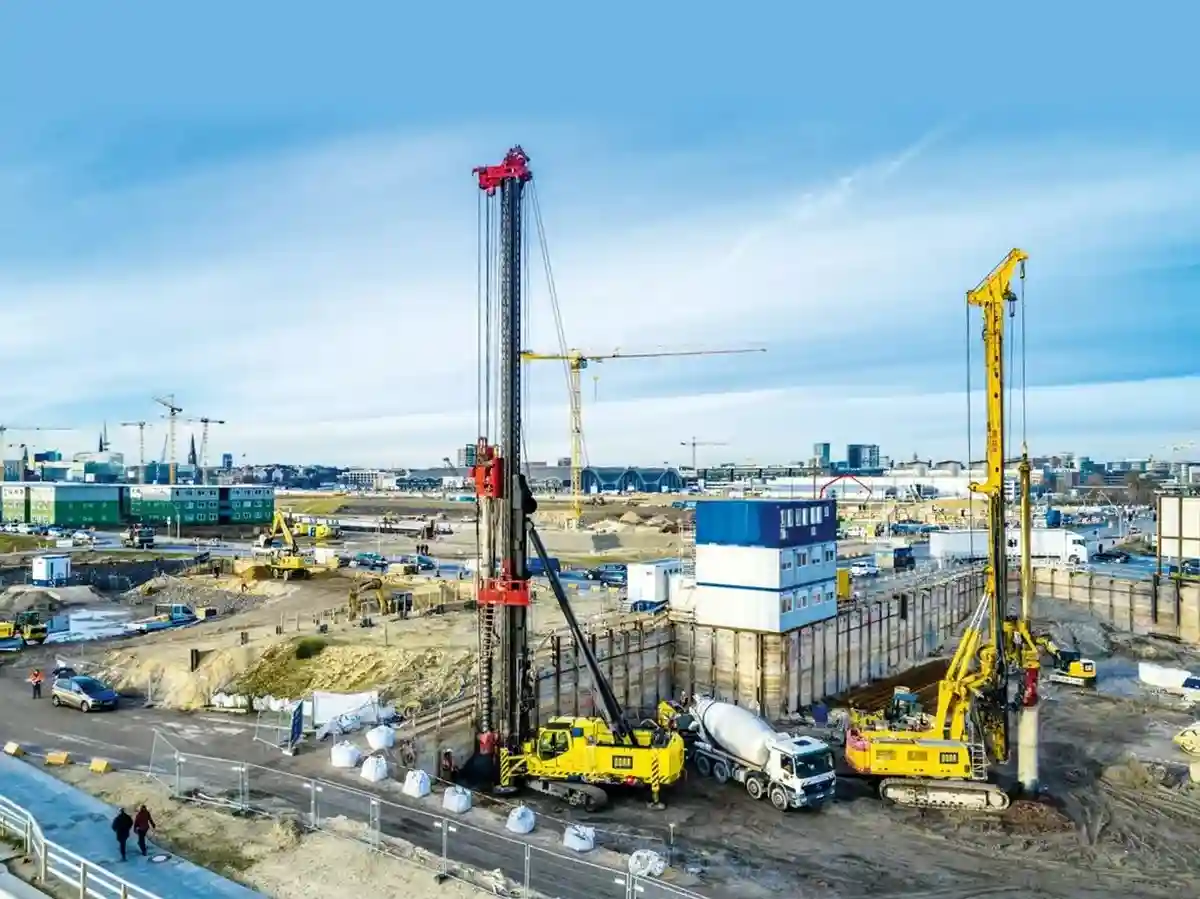
Local geotechnical conditions in Norwich
One recurring mistake we see in Norwich is assuming that the chalk is uniform and competent right from its upper surface. The Upper Chalk here has been subjected to periglacial weathering during the Pleistocene, creating a softened, structureless zone known as putty chalk or Grade V-VI material that can extend 2 to 4 metres below the rockhead. A contractor who treats the first refusal on a bored pile as proof of adequate bearing capacity is taking a significant gamble. The softened chalk offers much lower end-bearing resistance and can creep under sustained load, producing settlement that only manifests months after handover. CIRIA Report C574 and the work of Clayton on chalk socket behaviour are essential references here. We routinely specify socket inspection by downhole camera or SPT refusal criteria within the socket to confirm that the pile toe has penetrated the weathered mantle into structured Grade III chalk. Ignoring this step has led to costly retrofitting in at least two projects we have been called to assess in the NR1 and NR3 postcode areas.
Our services
Our pile foundation design work in Norwich covers the full lifecycle from desk study through to construction support. Each project follows the observational method embedded in Eurocode 7, where the ground model is progressively refined as site data accumulates.
Axial pile capacity analysis
We calculate shaft and base resistance using the CPT-based approach (LCPC method) and SPT correlations calibrated for East Anglian chalk. Each analysis is accompanied by a sensitivity study on the depth to the bearing stratum to account for the lateral variability typical of Norwich.
Settlement and group effect verification
Pile group settlement is evaluated through interaction factors and equivalent raft methods per BS EN 1997-1 Annex F. We pay particular attention to differential settlement across pile caps in the alluvial zones near the River Wensum and its tributaries.
Construction-phase pile testing
Static load tests and high-strain dynamic tests (PDA) are specified and supervised to validate the design assumptions. We correlate test results with the installation records to confirm that the pile toe has reached the competent chalk grade required by the socket verification clause.
Questions and answers
What depth of pile is typical for a residential extension in Norwich?
For a small residential extension on the glacial till that covers much of north and west Norwich, piles typically range from 8 to 14 metres depending on the proximity to the chalk surface. In the river valley alluvium south of the city centre, depths can extend beyond 16 metres. Each project requires a site-specific ground investigation because the chalk surface topography is highly irregular.
How much does a pile foundation design package cost in Norwich?
A complete pile foundation design package for a typical Norwich project, including ground investigation specification, axial capacity calculations, settlement analysis and a construction-phase testing plan, generally ranges from £1,390 to £5,270 depending on the number of piles, the complexity of the ground conditions and the testing requirements specified in the design.
Do you design driven piles for the Norwich Crag sands?
Yes, driven precast concrete piles can work well in the dense Norwich Crag sands, particularly on sites where the chalk is deep and the Crag itself provides a reliable bearing stratum. We assess driveability using wave equation analysis and verify the capacity through dynamic testing. The high density of the Crag can generate significant driving resistance, so hammer selection is critical.
How do you verify that the pile toe has reached competent chalk?
We specify a combination of criteria: visual inspection of the drilling spoil for chalk structure, SPT N-values within the socket (typically requiring N > 50 for Grade III chalk), and where justified, downhole camera inspection or cross-hole sonic logging. The socket verification procedure in BS EN 1997-1 Clause 7.6.2.3 provides the framework, and we tailor the acceptance criteria to the weathering profile observed during the ground investigation.