Norwich isn't uniform ground. We've seen it firsthand: the dense Cretaceous chalk in Thorpe Hamlet behaves nothing like the soft alluvial clays and river terrace gravels down by the Wensum in the city centre. A cut-and-cover car park near Riverside demands a fundamentally different monitoring plan than a basement dig up in the Golden Triangle, where the chalk is closer to the surface. That local split is why our team configures every monitoring array to the specific geology of your site. The chalk here is known for its karstic features—solution pipes and cavities that can surprise you. Before instrumentation goes in, we often recommend a targeted CPT test to map the rockhead profile and identify any soft zones within the chalk mass, ensuring that inclinometers and piezometers are placed where they'll actually capture the critical movement.
Monitoring isn't about reading numbers; it's about catching the trend before the crack forms.
Methodology applied in Norwich
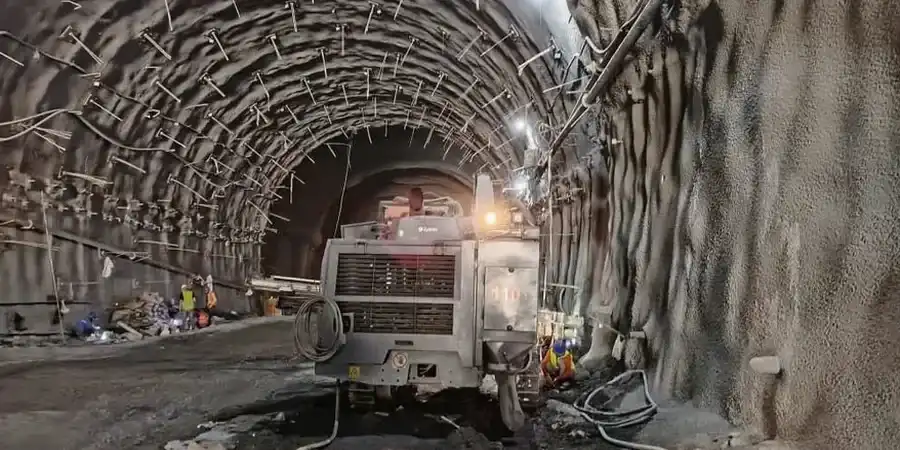
Local geotechnical conditions in Norwich
The climate here creates a distinct seasonal risk. East Anglia is famously dry, but when the Norfolk rains hit in autumn, they hit hard. The glacial till and head deposits that mantle the slopes near Mousehold Heath can go from stiff to sloppy within a single weather front. An excavation that was stable in August can start creeping towards the street in October. That's why piezometric monitoring is non-negotiable for any cut lasting more than a couple of months. We've tracked pore pressure spikes during wet winters that directly correlate with lateral movement in the retaining system. Combining real-time groundwater data with inclinometer profiles allows the design engineer to verify the drained parameters used in the Eurocode 7 analysis. If the water table rises faster than assumed, the support pressures need recalibration—and you'll know within hours, not weeks.
Our services
We deliver monitoring packages scaled to the job—from a single basement dig to a multi-phase city centre redevelopment. Every system is backed by a UKAS-accredited calibration chain and a direct line to our engineer on call.
Automated Total Station Networks
Permanent robotic total stations tracking optical prisms on adjacent buildings and the retaining structure itself. Data is streamed to a cloud portal with configurable alarm thresholds for displacement and rate of change.
Inclinometer and Piezometer Arrays
In-place inclinometer strings and vibrating wire piezometers installed through the retained ground. We handle the tricky chalk-flint interface without collapsing the borehole, getting you clean profiles from day one.
Questions and answers
What does geotechnical monitoring typically cost for a basement excavation in Norwich?
Monitoring costs depend heavily on duration and the number of instruments. For a standard residential basement dig lasting three to four months with automated settlement monitoring and manual inclinometer readings, budgets typically fall between £610 and £1,950. A more complex commercial excavation with an automated total station network and 24/7 live data will be towards the upper end or beyond, reflecting the hardware and engineering time involved.
How do you handle monitoring around Norwich's historic buildings?
We use non-invasive targets where possible and combine vibration monitoring with high-precision tilt sensors. The trigger levels are set conservatively, often based on a Category 3 building sensitivity per CIRIA guidance, and we liaise directly with the building owner's surveyor to agree on pre-construction condition surveys before any monitoring starts.
How quickly do I get the monitoring data after a reading?
Automated systems push data to the cloud in near real-time. Manual readings are processed and issued as a PDF report within 24 hours. For critical stages—like breaking out the temporary prop—we can offer immediate verbal updates to the site manager if a movement trend looks unusual.
Is monitoring really necessary if the ground conditions look good?
Yes. Even competent Norwich chalk can contain solution features that create localised instability. Monitoring confirms that the ground is behaving as the design assumed. If it isn't, the data gives you the evidence needed to make a controlled change to the works sequence, rather than discovering a problem after the concrete is poured.