When the ground investigation for a mixed-use development off King Street hit loose, water-charged alluvium above the chalk, the structural engineer knew a standard strip footing wasn't going to suffice. Norwich sits on a patchwork of river terrace deposits, glacial outwash, and the underlying Upper Chalk, and the transition zones between these units create some of the trickiest bearing conditions in East Anglia. In our knowledge, shallow foundation design across the city hinges on identifying solution features in the chalk precisely the kind of hazard that brought medieval buildings on Elm Hill to grief centuries ago. We assess bearing capacity and settlement through a combination of in-situ testing and laboratory classification, tying every parameter back to the ground model. Before committing to a footing geometry, it often makes sense to run a plate load test on the weathered chalk surface, and where the cover is thin, we pair this with seismic refraction to map bedrock irregularities without excessive probing.
A shallow foundation on Norwich chalk demands a dissolution hazard assessment, not just a bearing capacity check.
Methodology applied in Norwich
Local geotechnical conditions in Norwich
Norwich sits at approximately 30 metres above sea level on the River Wensum, but the real elevation that matters in foundation design is the buried chalk surface, which can plunge locally into deep solution pipes. The city's chalk bedrock is riddled with dissolution features, and where a shallow foundation bridges a soft-filled doline, differential settlement can exceed serviceability limits within the first year of loading. The risk is amplified in the post-glacial river valleys, where peat lenses and soft organic silts lie trapped beneath a desiccated crust. A desk study that skips the British Geological Survey's karst susceptibility maps for the Norwich area will miss the warning signs. We approach every shallow foundation scheme with a targeted investigation plan, because the cost of remediation after a differential settlement event in a terrace on Unthank Road far outweighs the upfront investment in a properly scoped ground investigation.
Our services
Our Norwich-based geotechnical team delivers shallow foundation design packages from feasibility through to construction, with a focus on the local ground risks that define the city's engineering geology.
Bearing capacity and settlement analysis
We develop analytical and numerical models for strip, pad, and raft foundations on Norwich's variable ground. Each analysis incorporates the effects of chalk dissolution and groundwater fluctuation, using parameters derived from site-specific field and laboratory testing.
Foundation inspection and construction support
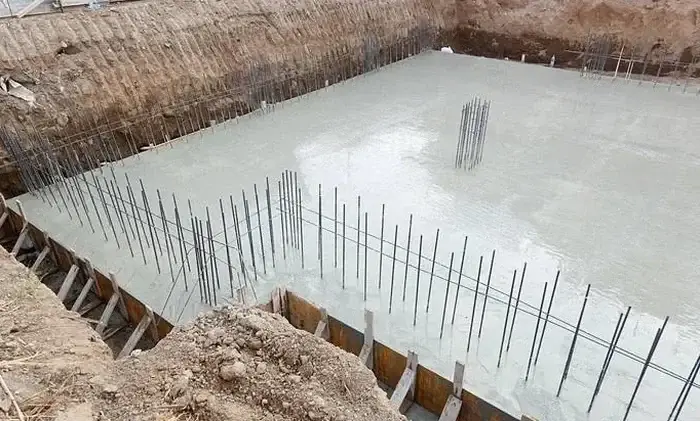
During excavation, we inspect bearing strata to confirm the ground model and verify that the chalk surface is free from soft infill. We offer written confirmation of allowable bearing pressure and advise on any necessary deepening or localised treatment before blinding concrete is placed.
Questions and answers
How much does a shallow foundation design package cost for a typical Norwich residential project?
For a single dwelling or small extension on a typical Norwich plot, the design package including desk study, ground investigation specification, bearing capacity calculations, and a foundation schedule typically falls between £1,480 and £2,160, depending on the complexity of the ground conditions and the number of trial pits or boreholes required.
What makes Norwich ground conditions different for shallow foundations compared to other UK cities?
The Upper Chalk beneath Norwich is prone to dissolution, forming pipes and sinkholes that are infilled with soft, compressible material. This creates a highly variable bearing surface, and the presence of river terrace gravels and glacial till above the chalk adds further complexity. A foundation design that works in London Clay or Mercia Mudstone simply cannot be transferred to Norwich without a site-specific investigation.
Do you need a trial pit inspection before pouring concrete for a strip footing in Norwich?
Yes, in our knowledge it is essential. The trial pit or trench inspection allows the geotechnical engineer to confirm that the bearing stratum matches the design assumptions, particularly to check for soft chalk infill or unexpected made ground. Under BS 8004, this verification step is a fundamental part of the observational method and should never be skipped.
Which Eurocode design approach do you adopt for shallow foundations in Norwich?
We predominantly use Design Approach 1 (DA1), which requires checking both Combination 1 and Combination 2 for bearing and sliding. For Norwich chalk, Combination 2 often governs the design due to the lower partial factors on material strength, and we supplement this with a serviceability limit state check on settlement using SLS load combinations.